Journal
Take that, Timothée Chalamet!
DARMSTADT – with the dance company Carte Blanche and “How Romantic”, Annabelle Bonnéry shows what she intends to do as the new director of dance at Staatstheater Mainz.
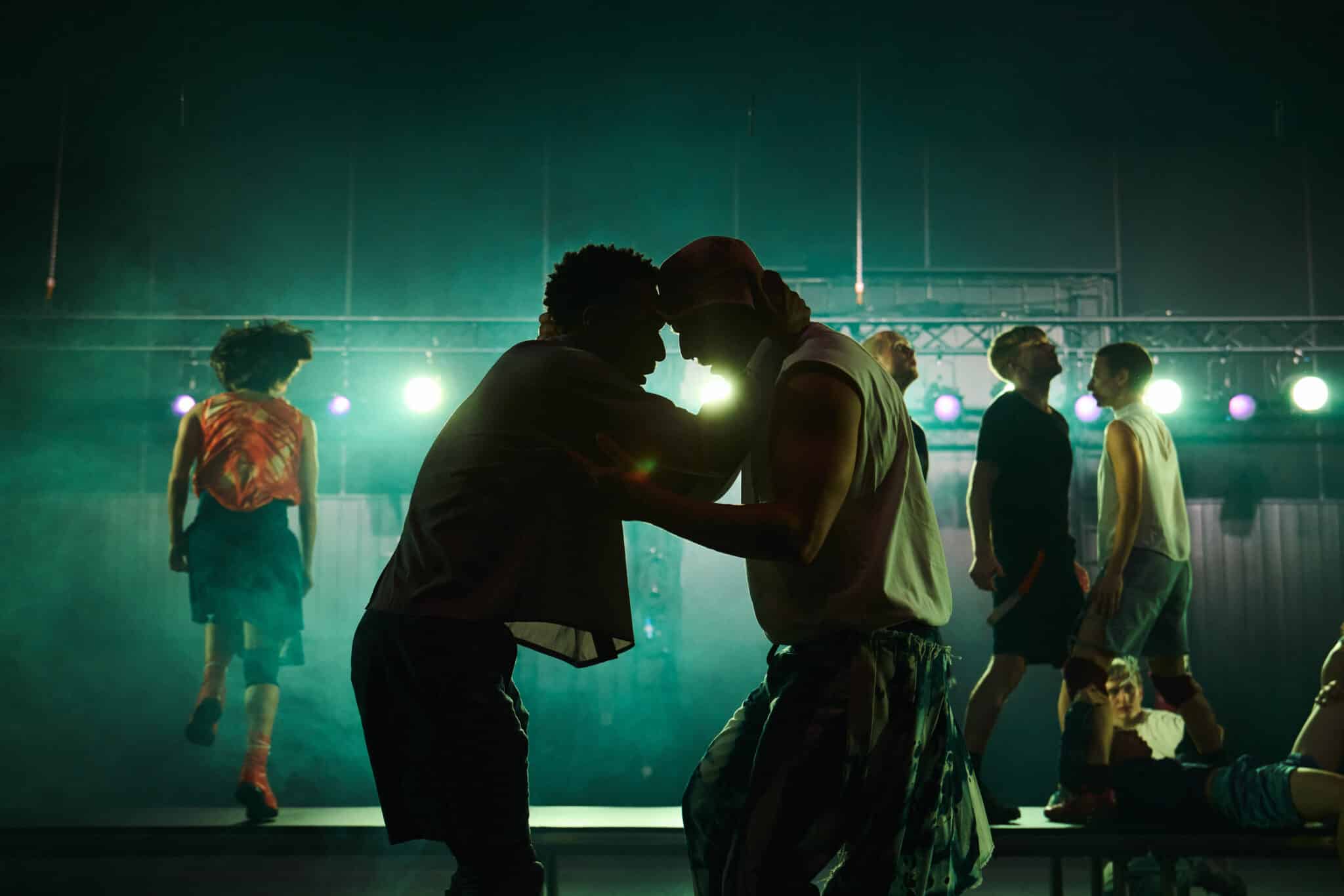
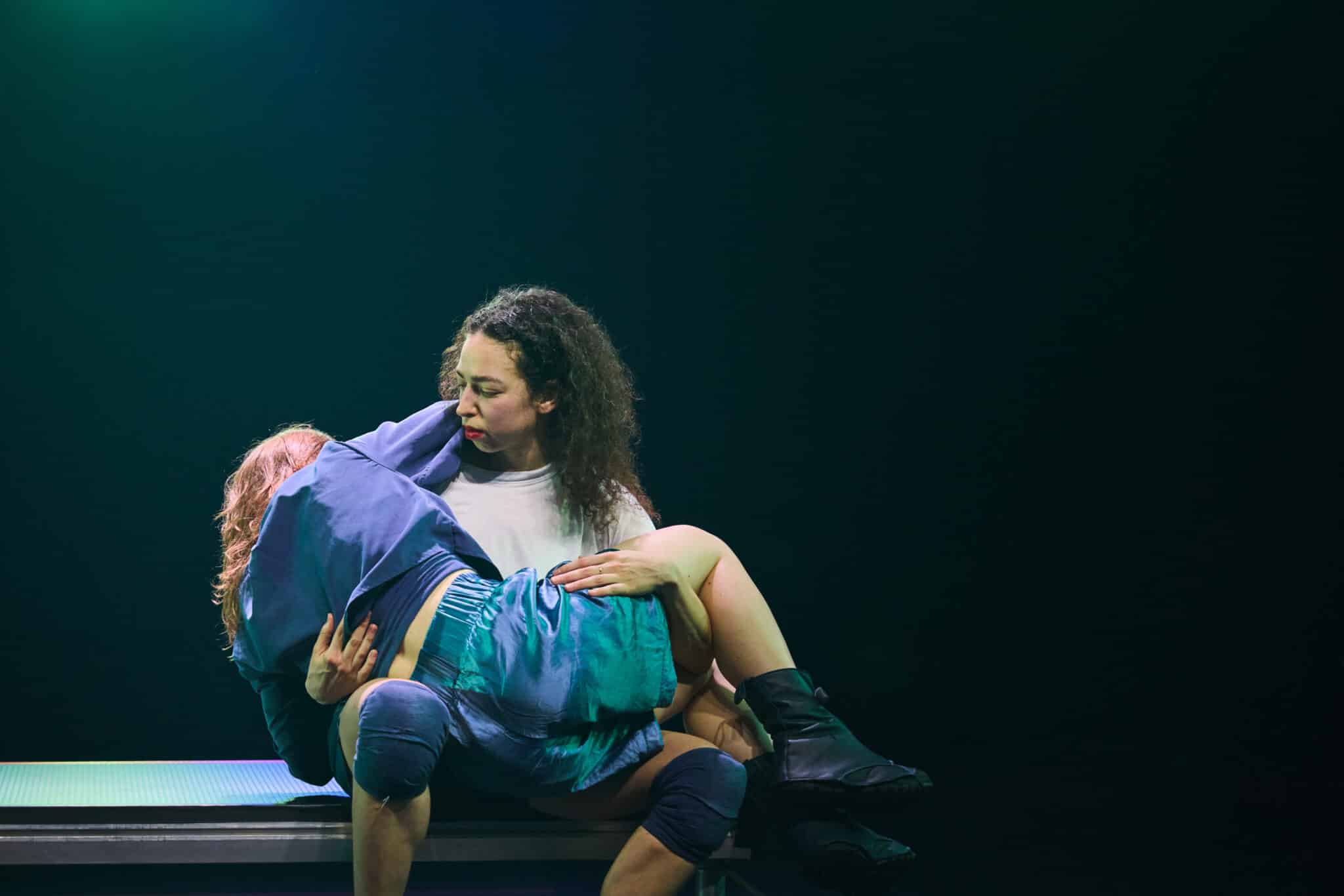
When they leap across the platform on stage like the Wild Hunt, a fierce wind seems to buffet the audience. Such is the energy unleashed by the 14 dancers of the Norwegian company Carte Blanche in a non-stop hour-long performance. It encompasses everything: love and pain, the desire to please, failure, exhaustion, perhaps even death.
“They Shoot Horses, Don’t They?”, Sydney Pollack’s 1969 film which unfolds over the course of a dance marathon, served as inspiration for the young Greek-French choreographer Katerina Andreou in her piece “How Romantic” (2025), in which nothing—absolutely nothing—can be called “romantic.”
In Cristián Sotomayor’s stage music, deafening beats throb. And before you’ve understood the ingenious, highly vibrant principle by which the ensemble relays movements, develops impulses, and forms and dissolves pairs, groups, and lines – a rock guitar comes in, offering a brief moment to breathe before the great drama begins.
Because the pairs that form cannot support one another, or if they can, then only for a short time. This makes it look breathtaking when they fling, carry, and even throw each other.
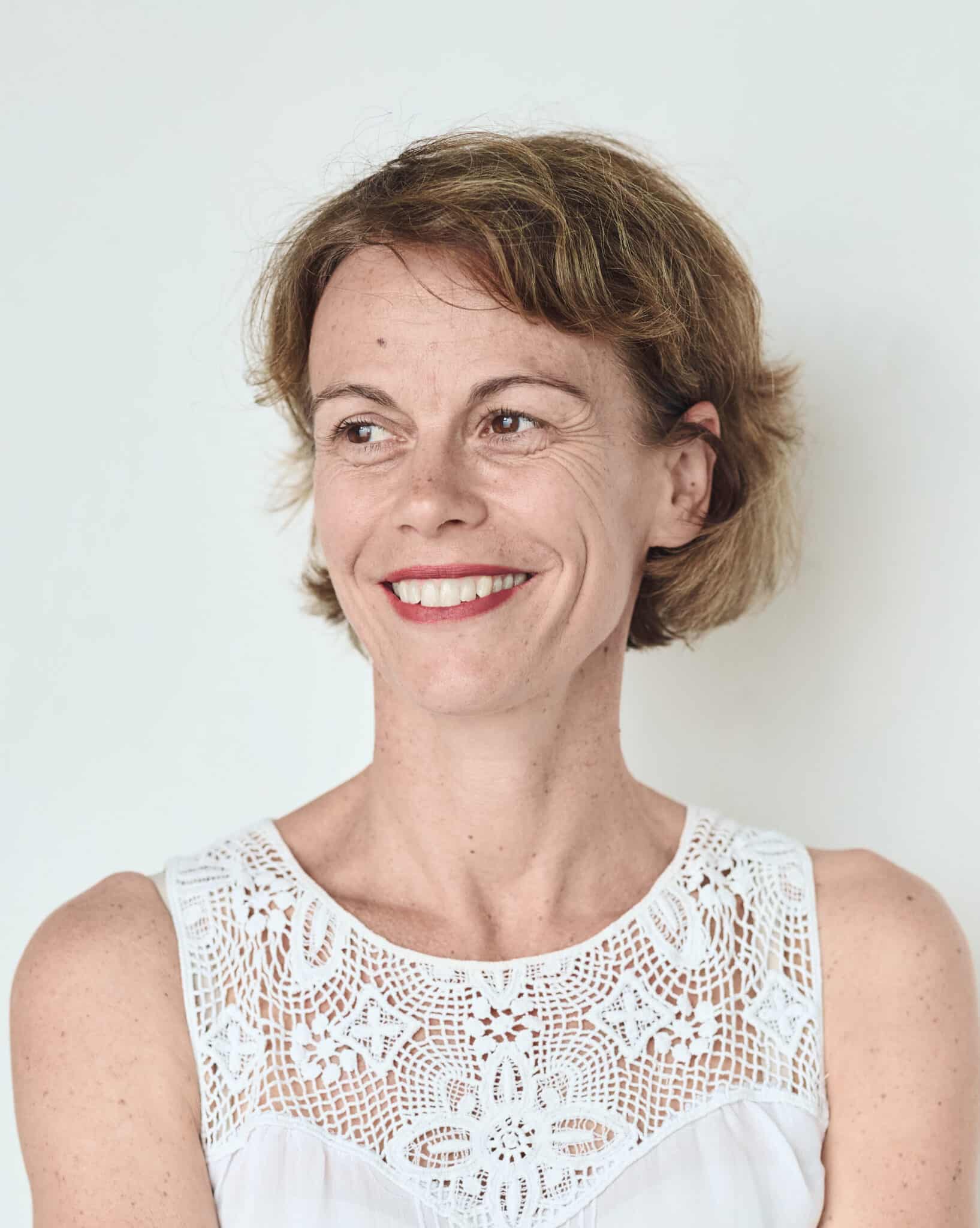
Since 2018, Annabelle Bonnéry, born in Dijon in 1973, who was first a dancer and then a choreographer and who also, almost incidentally, studied English and cultural management, has led the company.
The principle: to invite international choreographic voices to work with the dancers—always new, always different. As in Andreou’s case, with a high level of intensity that shows and generates emotion, but is entirely developed from the physicality of dance.
What emerges from this guest-based model can currently be seen in the repertoire of the Hessian State Ballet, which is showing Corps de Walk, a piece Sharon Eyal created with Carte Blanche in 2011, before she became internationally renowned. She later came to Tanzmainz, which was able to tour internationally with her works and thereby further establish the strong reputation of the Mainz dance ensemble.
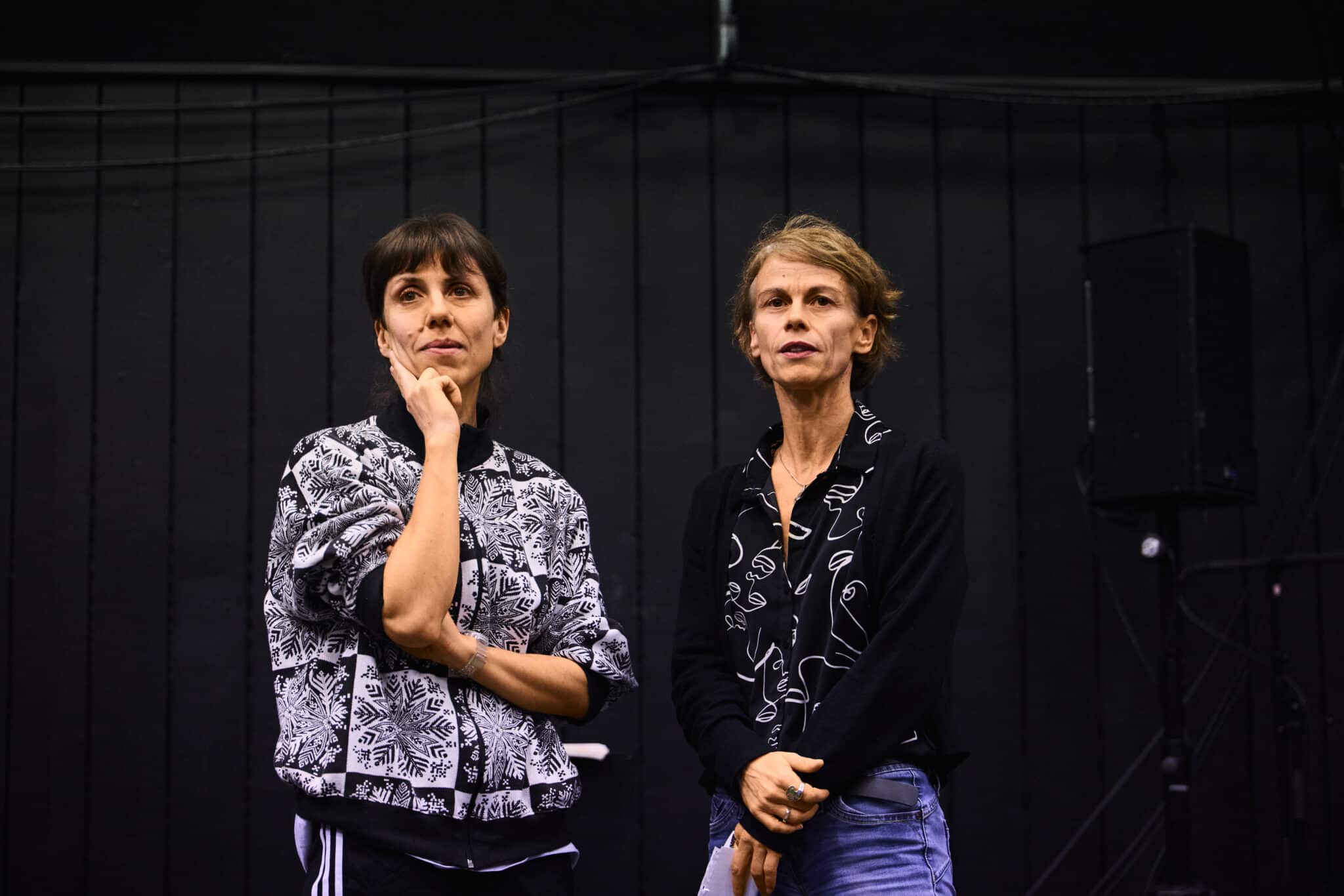
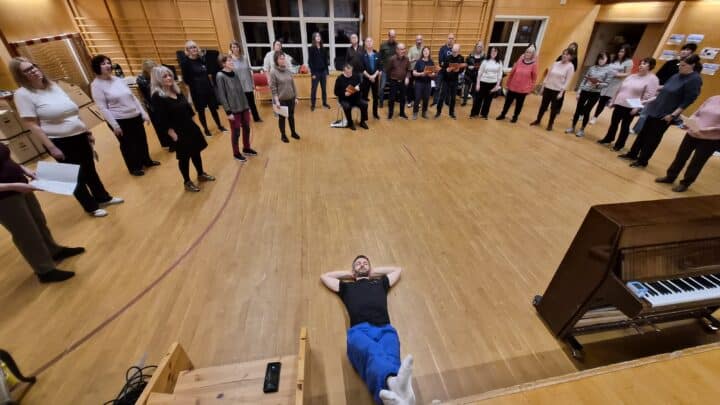
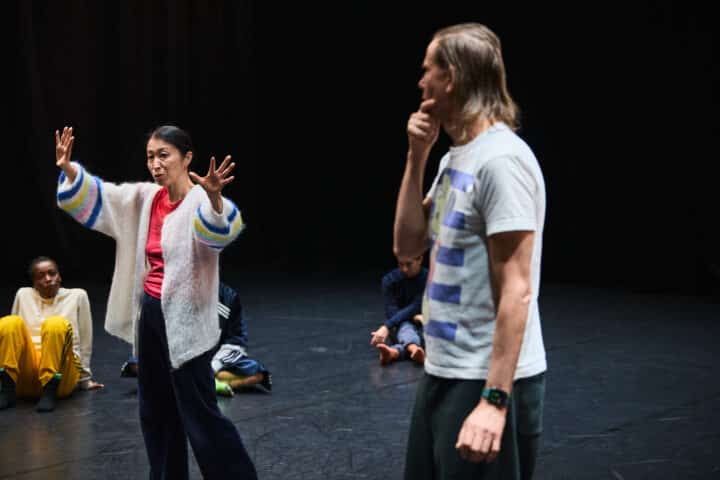
What will that look like? One must take time to get to know a place and to develop formats, Bonnéry says. In any case, she wants to involve audiences even more in the rehearsal process—in what occupies the ensemble. Tanzmainz has developed “spectacularly,” she says. Expanding the festival internationally and increasing touring are among the ideas she is working on. The dancers, in turn, should have opportunities to interact with audiences beyond the stage. And the good neighborly relationship with her trusted colleague Heynderickx could lead to even more cooperation—and perhaps to a few more guests from the Nordic dance scene. Because the scene has much to offer, as we have experienced just now with Carte Blanche.