Journal
Meet Mette Ingvartsen the choreographer of Unchained Melody
Get to know choreographer Mette Ingvartsen as she shares the ideas behind Unchained Melody, the work with song and dance, and how the performance explores love as both a personal and collective experience.
Could you briefly introduce yourself and your artistic background?
I grew up in Denmark in the 1980s and 1990s, but I have now been living abroad for more than 25 years, and I am currently based in Belgium. I started dancing when I was very young, initially through street dance and hip hop, and I was performing a lot as part of a youth group. Quite quickly I realised that what interested me most was making performances. I created my first choreographies as a teenager while attending a dance boarding school in Denmark, and since then choreography has really been the centre of my practice.
Over the years, my work has moved through very different questions and forms, often expanding choreography through connections with voice, visual art, theory, music, and questions around collectivity. In my earlier projects, such as The Artificial Nature series, I explored relations between human and non-human agency, while in my later works I focused more on sexuality, affect, and the political history of the naked performing body. Right now, I am really interested in working on the topic of love.
Can you describe your artistic process for this work?
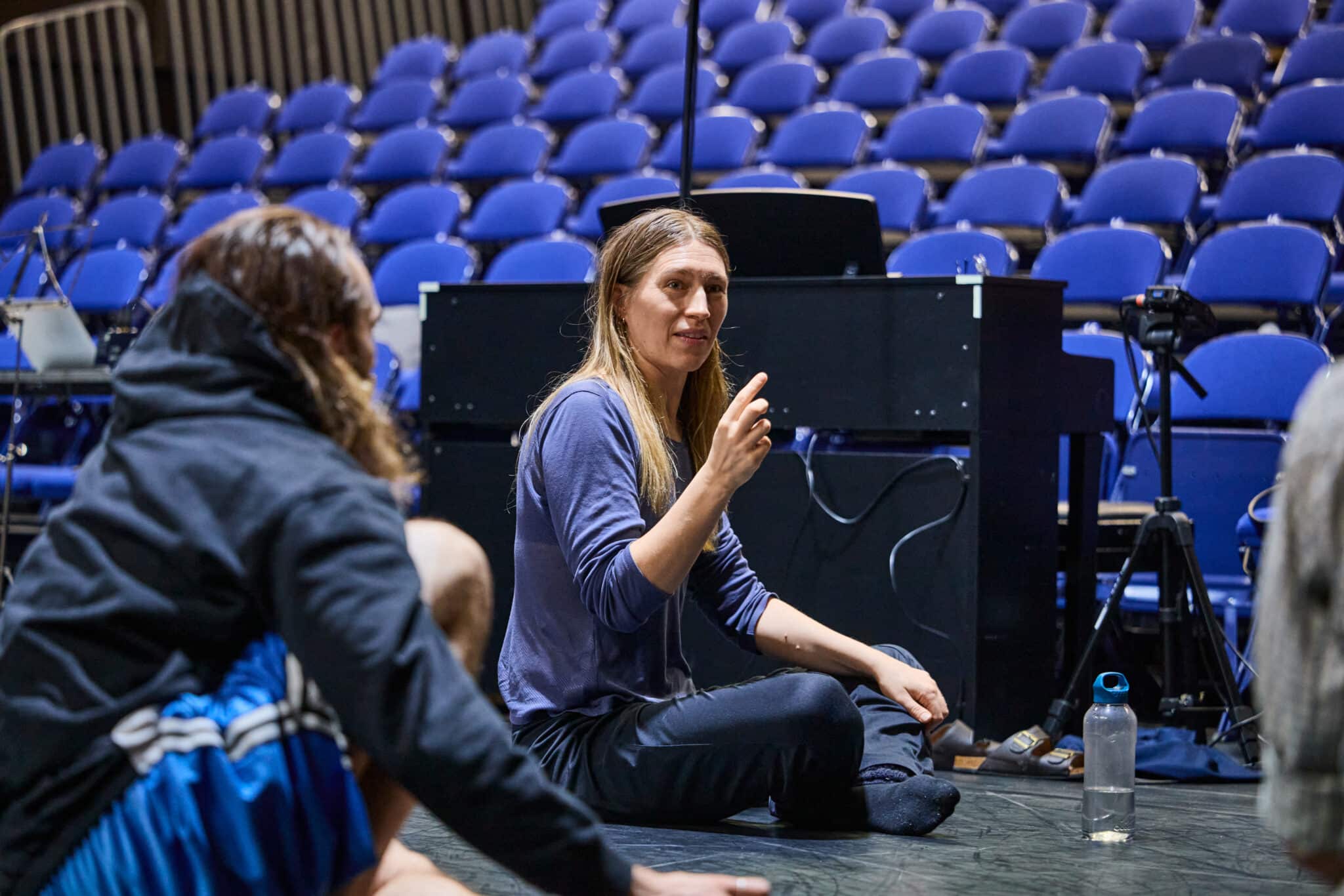
What has been particular in this process is the decision to treat singing and dancing as inseparable activities. The performers sing and move almost constantly throughout the piece, which has required a very specific way of working.
This also meant collaborating closely with Rikke Lina Matthiessen, the voice coach at Carte Blanche, who has worked with the dancers for many years, as well as with my collaborator and dramaturge of the performance, Fabienne Seveillac. Together we have discussed not only the selection of the songs, but also how different vocal modulations, tonalities and emotional inflections can shift their meaning.
Voice has appeared in many of my previous works – through speech, laughter, crying, breathing, or rhythmic vocalisations – but singing represents a newer direction for me. I am not a trained singer myself, which perhaps makes the exploration even more compelling, as I am also learning a lot. This process has allowed me to discover new ways of thinking about choreography through musicality, resonance, and emotional transmission.
At the same time, the work extends an ongoing interest in how choreography can operate beyond movement alone. I have never been interested in establishing a fixed movement language or stylistic signature. What continues to drive me is experimentation: with forms, with perception, and with how performance can produce new relations between bodies, emotions, and collective experience.
Water also seems to play an important role in the choreography. Could you talk about that?
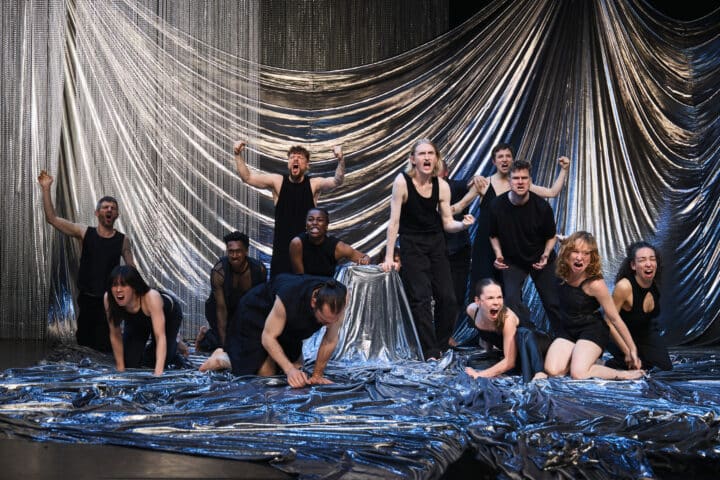
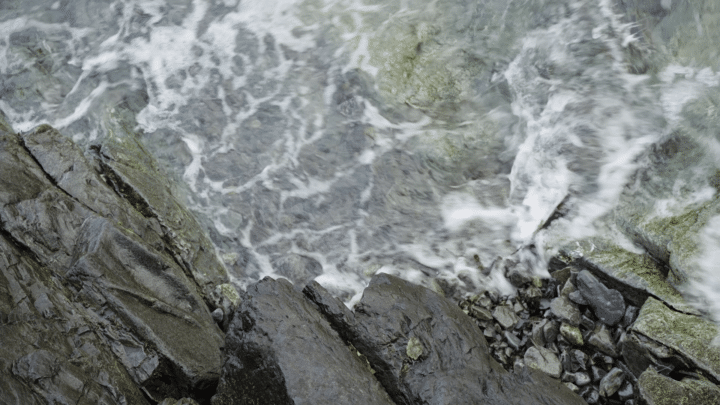
Water, the sea and the ocean, has been an important imaginary within the piece from the very beginning. The choreography is structured around the idea of waves: the dancers enter as a single rocking mass, and many of the movements are based on rhythms of rising and falling, with one body ascending as another descends. I was interested in creating a kind of choreographic landscape in which the dancers remain deeply interconnected.
At the same time, these are not only literal waves, but also waves of affect and emotion. The work explores what it means to be emotionally submerged – overwhelmed by feeling within a love relationship. I often thought about the piece as a kind of “sea of affect” or “ocean of emotion,” where emotional states circulate continuously between bodies.
This also relates to the materiality of the body itself. Since our bodies are largely composed of water, we worked with a “liquid movement practice,” focusing on sensations of fluidity, circulation, and internal motion. At moments, this appears as movements rippling through the body like waves.
The scenography extends this logic through reflective surfaces – chains and metallic curtains that catch and refract the light like the surface of water. In this sense, the stage becomes a shifting reflective landscape, both physically and emotionally.